
Most people assume that changing someone’s mind, selling a product, or directing public behavior requires compelling logic or overt force. But the most effective way to control what people do is much simpler: exploit how the human mind is wired.
This practice is called social engineering. Social engineering is the art of manipulating human psychology to influence choices, habits, and actions without people ever realizing they are being guided.
Digital safety isn’t just about firewalls and strong passwords, it’s about understanding how your mind can be hacked. Today we explore the origins of social engineering and how the same psychological triggers used in advertising are deployed by digital scammers today.
While many associate social engineering with digital scams, its core techniques were actually pioneered a century ago by corporate strategists and public relations experts seeking to shape public opinion and consumer behavior.
Where It Began: How Edward Bernays Hacked Human Psychology
In the 1920s, a man named Edward Bernays (the nephew of famous psychoanalyst Sigmund Freud) pioneered what he called the “Engineering of Consent.” Bernays realized that trying to convince people using logic and facts was slow and ineffective. Instead, he discovered that tapping into subconscious emotions, social fears, and personal identity allowed him to guide public behavior on a massive scale.
Two famous historical operations show how Bernays built the blueprint for modern manipulation:
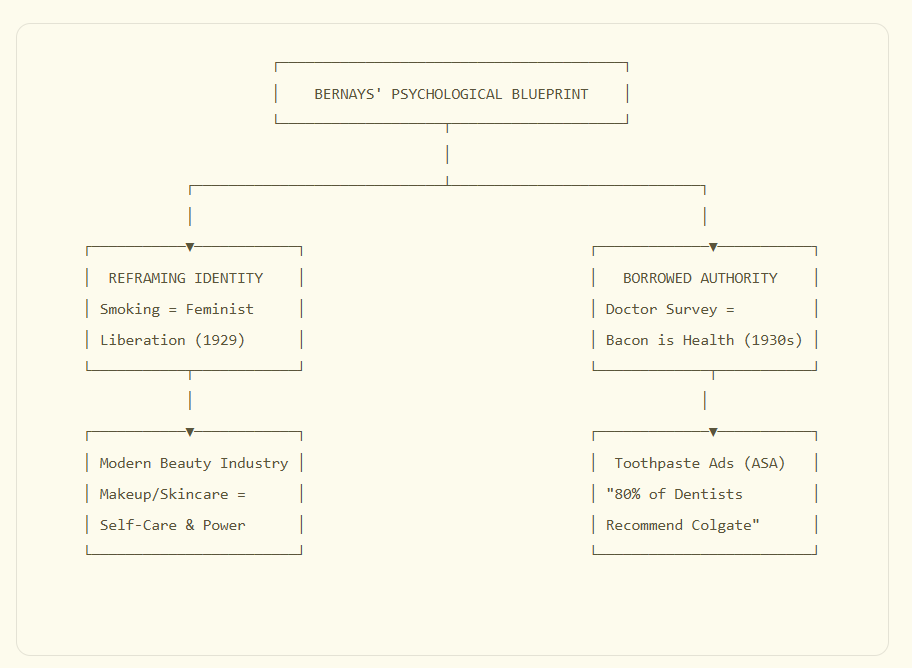
“Torches of Freedom” (1929): Linking Products to Personal Identity
The Problem: In the 1920s, public smoking by women was considered socially taboo. The American Tobacco Company wanted to double its customer base by selling cigarettes to women.
The Trick: Bernays hired attractive young women to march in New York’s famous Easter Parade and dramatically light up cigarettes in front of news photographers. He tipped off reporters beforehand that a group of feminists was staging a protest, branding cigarettes as “Torches of Freedom.”
The Result: Bernays didn’t advertise that cigarettes tasted good, he reframed smoking as a powerful symbol of women’s independence. The social taboo vanished overnight, and sales exploded.
The Bacon & Eggs Scam: Borrowing Scientific Authority
The Problem: Most Americans in the early 1930s ate a light breakfast of fruit, bread, and coffee. The Beech-Nut Packing Company was losing money on bacon sales and wanted people to eat meat in the morning.
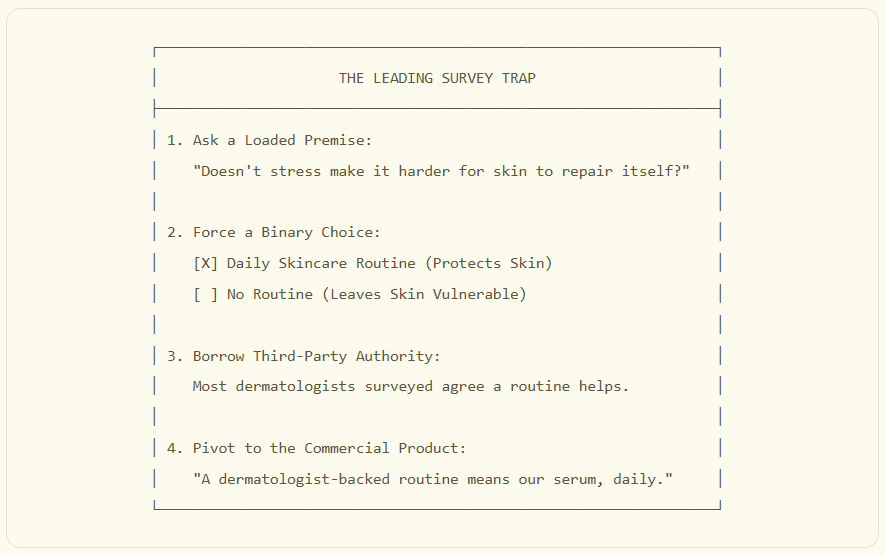
The Trick: Bernays didn’t run traditional ads. Instead, he pioneered the use of a leading survey. Leading survey is basically a questionnaire written with biased questions designed to nudge respondents toward a pre-determined conclusion rather than uncovering objective truth.
How the Survey Was Framed: If Bernays had asked doctors, “What is the healthiest breakfast?”, he would have received hundreds of conflicting answers. Instead, he asked 5,000 physicians a biased question: “Given that the human body loses energy overnight during sleep, do you agree that a heavy, heartier breakfast is better for physical health than a light breakfast?” Because replacing spent overnight energy is medically logical, over 4,500 doctors agreed.
Bernays published these survey results as major medical news (“4,500 Doctors Urge Heavy Breakfast”), casually suggesting in press releases that a doctor-recommended heavy meal naturally meant bacon and eggs.
The Result: By borrowing the authority of medical professionals through a rigged survey, Bernays permanently reshaped the “traditional American breakfast.”
How the Same Strategies Shape Modern Advertising
The exact strategies pioneered by Bernays remain dominant in modern branding and advertising, proving how easy it is to manipulate human perception using identity and authority.
Reframing Identity: “Femvertising” and the Beauty Industry
Just as Bernays took a health-damaging habit (smoking) and rebranded it as feminist liberation, the modern beauty and cosmetic industries have rebranded buying makeup and skincare as “empowerment” and “essential self-care.”
The Playbook: Academic research on Commodified Feminism (often called “femvertising”) shows how beauty brands systematically replaced traditional, vanity-driven terms like “hide aging” with psychological wellness language like “nourish,” “self-love,” and “mental health reset.”
The Manipulation: By tying an $80 serum or makeup routine to your political identity, self-worth, or emotional boundaries, the brand shifts the purchase from a commercial transaction to a moral choice. If you critique or skip the product, it feels like you are neglecting your own self-worth.
Leading Surveys: The Toothpaste Industry
Bernays’ doctor-survey trick remains the go-to method for manufacturing fake scientific consensus. Instead of asking open-ended questions, companies use leading or multi-choice survey designs to force a desired percentage.
Colgate 2007 Ruling: For years, Colgate ran nationwide advertisements claiming that “More than 80% of dentists recommend Colgate.”
The Trick Revealed: In a landmark ruling, the UK Advertising Standards Authority (ASA) investigated the claim and banned the advertisement. The investigation revealed that the survey allowed dentists to check off multiple brands they recommended. Dentists didn’t choose Colgate over other brands, many simply checked Colgate alongside Sensodyne or Oral-B. Colgate took every dentist who checked their box and claimed an overwhelming +80% exclusive endorsement.
How to Spot Psychological Triggers in Everyday Life
Whether you are looking at a suspicious message in your inbox or watching a sleek advertisement on social media, the core strategy is the same: distract your logical mind by triggering an immediate emotional response.
Here is how to spot the three most common psychological triggers used in daily life:
1. Reframing (Connecting a Product or Action to Your Identity)
Reframing takes a basic transaction and ties it to your values, self-worth, or status.
In Marketing: A brand doesn’t just sell you soap or tea; they frame it as “honoring your boundaries” or “practicing self-care.” If you hesitate to buy it, it feels like you are choosing not to care for yourself.
In Daily Requests: Someone doesn’t just ask you for a favor or password reset; they frame compliance as being a “responsible employee,” a “supportive friend,” or “protecting security.”
How to Spot It: Ask yourself, “What am I actually being asked to do?” Strip away the emotional language. Are you being asked to spend money? Hand over data? Click a link? Evaluate the action itself, not the feeling attached to it.
2. Manufactured Urgency (Bypassing Your Logic)
Urgency forces your brain to switch from analytical thinking to survival mode. When you feel rushed, you make quick decisions based on impulse rather than reason. You’ve seen me discuss this in this Phishing post as well.
In Marketing: Countdown timers (“Only 2 hours left for 50% off!”), limited stock warnings (“3 people have this in their cart right now”), or seasonal pressure.
In Scams/Promotions: Shocking alerts (“Your account will be frozen in 15 minutes unless you verify your identity!”).
How to Spot It: Look for artificially strict deadlines. Ask yourself, “What genuinely happens if I wait 24 hours to think about this?” Real emergencies rarely happen via automated text messages or generic promotional emails.
3. Borrowed Authority & Artificial Consensus
People naturally defer to experts, celebrities, and group consensus to save mental energy when making decisions.
In Marketing: Claims like “9 out of 10 dermatologists recommend” (often based on leading survey questions, just like Bernays’ bacon campaign, the Colgate case) or paying influencers to give “unfiltered” reviews.
In Scams/Pitches: Messages that copy official logos (like major brands, tech providers, or government agencies) or callers impersonating technical support or official figures.
How to Spot It: Check the source independently. Don’t rely on the credentials displayed inside the message. For an email or alert, inspect the actual sender address. For a product claim, check if the “scientific study” was funded by the company selling the product.
The Golden Rule:
The most basic yet powerful habit you can build is 5 second pause before any action. Whenever you feel a sudden surge of panic, excitement, guilt, or flattery from a message or ad, treat that emotion as an instant red flag.
Pause: Take a breath and step back.
Isolate the Request: What specific action do they want me to take right now?
Verify Independently: Go directly to a trusted source rather than using the links, phone numbers, or narratives provided to you.
The goal of this post is to make you aware of these tactics so that you can recognize them when they are used and make your choices consciously rather than be manipulated into it by someone else.
Bonus: Test Your Skills!
Here is a short quiz to test if you can identify the 4 triggers we have discussed above: Spot the Trigger Quiz
Each correct answer is worth 1 point, see how you score at the end.
(Disclaimer: this is a self-generated quiz for fun, not a diagnosis!)
Score interpretation:
5-6 points: Sharp eye. You catch these triggers before they catch you.
3-4 points: Solid instincts, but a couple slipped past.
0-2 points: These triggers are working exactly as designed, which is most people. Worth slowing down next time something feels urgent, expert-backed, or deeply personal.
References
Bernays’ “Torches of Freedom” campaign and the bacon-and-eggs survey: Center for Health Incentives and Behavioral Economics, University of Pennsylvania
“Commodified feminism” / femvertising research: Communicative Cultures journal
Colgate “80% of dentists” ASA ruling (2007): Cosmetics Business, marketinglaw